The Magic of Traditional Basil Pesto: A Flavorful Journey
Hey there, fellow food lovers! Today, we’re diving into one of the culinary gems of Italian cuisine: Traditional Basil Pesto. This vibrant green sauce is not just a treat for your taste buds; it’s a celebration of fresh ingredients and a wonderful way to brighten up any dish. Whether you’re swirling it into a bowl of pasta, slathering it on a grilled chicken breast, or dolloping it on top of roasted vegetables, basil pesto has that magical ability to elevate everyday meals into something spectacular.
Imagine this: A warm summer evening, fresh basil leaves swaying gently in the breeze. The intoxicating aroma of garlic mingling with pine nuts roasting in the oven. It’s a perfect scene to whip up a batch of homemade pesto. And the best part? It’s so incredibly simple to make!
A Taste of Nostalgia: My First Bite of Pesto
I’ll never forget the first time I tasted homemade pesto. It was during a family gathering in my grandmother’s cozy kitchen. She was stirring a vibrant green concoction in her trusty food processor while the scent of fresh basil filled the air. "This is magic in a jar," she said with a twinkle in her eye, and as she tossed it with a bowl of pasta, I knew I was in for something special.
It wasn’t just the flavors that captivated me; it was the joyful atmosphere surrounding that meal. My family gathered around the table, laughter echoing as we savored each forkful, every bite a burst of fresh, bold flavors. From that day on, basil pesto became a staple in our household. I knew then that I wanted to share this experience with others, and that’s exactly what I hope you’ll feel when you whip up this delightful recipe today!
Ingredients: The Heart of Pesto
Here’s what you’ll need to make your own batch of traditional basil pesto. Each ingredient plays a crucial role in creating its vibrant flavor.
-
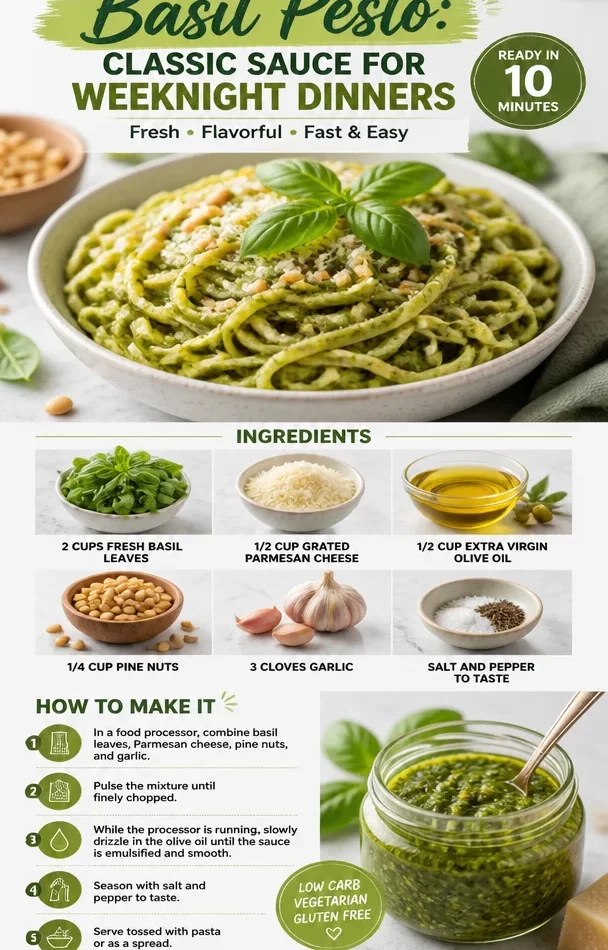
2 cups fresh basil leaves: Fresh basil is the star! When selecting, look for bright green leaves without any brown spots. If you can’t find fresh basil, you can use spinach or arugula, but the flavor will be different.
-
1/2 cup grated Parmesan cheese: This adds a rich, savory depth to the pesto. For a twist, try Pecorino Romano for a sharper, saltier flavor. You can also opt for nutritional yeast if you’re looking for a dairy-free alternative.
-
1/2 cup extra virgin olive oil: This rich oil brings everything together smoothly. Always go for the good quality stuff! You can substitute it with avocado oil or a nut oil like walnut oil, but keep in mind it will alter the taste.
-
1/4 cup pine nuts: Pine nuts give pesto its delightful nuttiness. If they’re hard to find or a bit pricey, feel free to swap in walnuts or even sunflower seeds for a budget-friendly twist!
-
3 cloves garlic: Fresh garlic adds a punch of flavor. If you want a milder taste, roast the garlic first. It becomes sweet and wonderful!
-
Salt and pepper to taste: Essential for balancing the flavors. Sea salt is a great option here.
Step-by-Step Instructions: Let’s Make Some Pesto!
Now that we have our ingredients ready, let’s roll up our sleeves and make some delicious basil pesto.
Step 1: Prep the Basil
Start by thoroughly washing your fresh basil leaves. Pat them dry with a paper towel or use a salad spinner to remove excess water. Wet basil can dilute the flavors and give your pesto a watery consistency.
Step 2: Toast the Pine Nuts
In a dry skillet over medium heat, gently toast the pine nuts for 3-4 minutes, stirring frequently until they’re golden and fragrant. This step enhances their nutty flavor and adds depth to your pesto. Just be careful not to burn them!
Step 3: Garlic & Nuts in the Food Processor
Next, add your toasted pine nuts and raw garlic cloves to a food processor. Pulse them a few times until coarsely chopped. This helps prevent the garlic from being overpowering in the final blend.
Step 4: Add Basil and Cheese
Now, throw in your fresh basil leaves and grated Parmesan cheese. Pulse a few times, scraping down the sides to ensure everything blends evenly. You want a slightly chunky texture, so don’t over-blend just yet.
Step 5: Drizzle in Olive Oil
With the processor running, slowly drizzle in the extra virgin olive oil until fully combined. This is when your pesto will start to come together beautifully. You might need to stop and scrape the sides once or twice to get everything mixed perfectly.
Step 6: Season to Perfection
Lastly, season your pesto with salt and pepper. Give it a taste—does it need more garlic? Salt? Adjust it according to your preference.
Step 7: Store It Right
Transfer the pesto to a clean jar or airtight container and store it in the fridge. It should last for about a week. To keep it fresh, pour a thin layer of olive oil on the surface before sealing.
Serving Suggestions: Make It Shine
When it’s time to serve your pesto, toss it with hot, freshly cooked pasta for a classic dish. Or try drizzling it over grilled vegetables for a vibrant addition to your meal. You can also spread it on sandwiches or use it as a dip for fresh veggies or crusty bread—so versatile and delightful!
Recipe Variations: Get Creative!
Feeling adventurous? Here are a few variations to play around with:
- Spinach & Arugula Pesto: Use a mix of spinach and arugula for a peppery kick!
- Sun-Dried Tomato Pesto: Add sun-dried tomatoes to the mix for a rich, tangy twist.
- Nut-Free Version: Swap in roasted pumpkin seeds for a nut-free alternative without sacrificing flavor.
- Herb Mix: Mix other herbs like parsley or cilantro with basil for a unique flavor profile.
- Lemon Zest: Add a bit of lemon zest for an extra burst of freshness!
Chef’s Notes: A Journey Through Flavor
Pesto has a fascinating history—originating in Genoa, Italy, it has evolved over time. When I first started making pesto, I followed the traditional recipe to a T. But as I experimented, I discovered how adaptable it could be. Whether you’re blessed with abundance from your herb garden or trying to use up leftovers, the core flavor profile allows for playful twists. After all, the kitchen is about creativity, exploration, and having fun!
FAQs and Troubleshooting
1. My pesto turned out too bitter; how can I fix it?
Bitterness can come from over-toasting the garlic or pine nuts. If this happens, try adding a little sugar or more cheese to balance the flavor.
2. Can I freeze pesto?
Absolutely! Just pour it into ice cube trays, freeze, and then transfer to a bag. Perfect for when you need a quick flavor boost!
3. My pesto is too thick; what can I do?
If your pesto is too thick, simply add a bit more olive oil, one tablespoon at a time, until you reach your desired consistency.
4. Can I use a different cheese?
Of course! Just keep in mind that different cheeses will give your pesto a distinct taste. Experiment until you find your perfect blend!
Nutritional Info
While I’m not a nutritionist, a typical serving of homemade pesto is generally high in healthy fats, primarily due to the olive oil and nuts. It also packs vitamins and antioxidants from the basil and garlic, making this a flavorful, nutritious addition to your meals.
When you cook with intent and a bit of creativity, the possibilities are endless. So, grab your ingredients, channel your inner chef, and make some unforgettable memories with this Traditional Basil Pesto recipe. Happy cooking!
PrintTraditional Basil Pesto
A vibrant and flavorful basil pesto that elevates any dish with its fresh ingredients.
- Prep Time: 10 minutes
- Cook Time: 5 minutes
- Total Time: 15 minutes
- Yield: 1 cup 1x
- Category: Sauce
- Method: No-Cook
- Cuisine: Italian
- Diet: Vegetarian
Ingredients
- 2 cups fresh basil leaves
- 1/2 cup grated Parmesan cheese
- 1/2 cup extra virgin olive oil
- 1/4 cup pine nuts
- 3 cloves garlic
- Salt and pepper to taste
Instructions
- Wash the fresh basil leaves thoroughly and pat dry.
- Toast the pine nuts in a dry skillet over medium heat for 3-4 minutes.
- Add toasted pine nuts and raw garlic cloves to a food processor and pulse until coarsely chopped.
- Throw in the fresh basil leaves and grated Parmesan cheese, pulsing until slightly chunky.
- Drizzle in the extra virgin olive oil while the processor is running until fully combined.
- Season the pesto with salt and pepper to taste.
- Transfer the pesto to a clean jar or airtight container and store in the fridge.
Notes
To keep pesto fresh, pour a thin layer of olive oil on the surface before sealing.
Nutrition
- Serving Size: 2 tablespoons
- Calories: 230
- Sugar: 0g
- Sodium: 150mg
- Fat: 23g
- Saturated Fat: 3g
- Unsaturated Fat: 20g
- Trans Fat: 0g
- Carbohydrates: 3g
- Fiber: 1g
- Protein: 4g
- Cholesterol: 10mg
Keywords: pesto, basil pesto, Italian sauce, vegetarian sauce, homemade pesto